Storage without PVC: which materials are safe for coins
Mylar, polypropylene, polyethylene, acrylic, acid-free paper – and those “handy” pouches that slowly ruin a collection
BulgarianCoins editorial team 2 min read
Choosing packaging seems like a minor question, but it is one of the most important for a collection. The wrong material does no harm straight away – the damage shows years later, when it is too late. Here are the materials that are safe and how to recognise the dangerous ones.
The problem with PVC
Polyvinyl chloride (PVC) is a rigid material. To make it soft and transparent, plasticisers are added. Over time they leach out and, together with the chlorine, form a sticky green film on the coin. On copper and silver it eats into the surface. How to remove a fresh film is explained in Removing PVC from coins.
Soft, flexible pouches and album pages that feel slightly “greasy” are most often PVC. Especially old albums from the 1970s and 1980s.
Safe materials
| Material | Where you find it | Advantages | Disadvantages |
|---|---|---|---|
| Mylar (polyester) | rigid “flips” | chemically inert, transparent | brittle, can scratch when inserting |
| Polypropylene | album pages, pockets | no plasticisers, cheap | less transparent |
| Polyethylene | soft pouches, bags | inert, soft | matt |
| Acrylic, polycarbonate | rigid capsules, slabs | full protection, transparency | more expensive |
| Acid-free paper and card | 2×2 envelopes, boxes | breathe, cheap | do not protect against moisture |
| Stable polystyrene | rigid boxes and trays | rigid, inert | some types turn yellow |
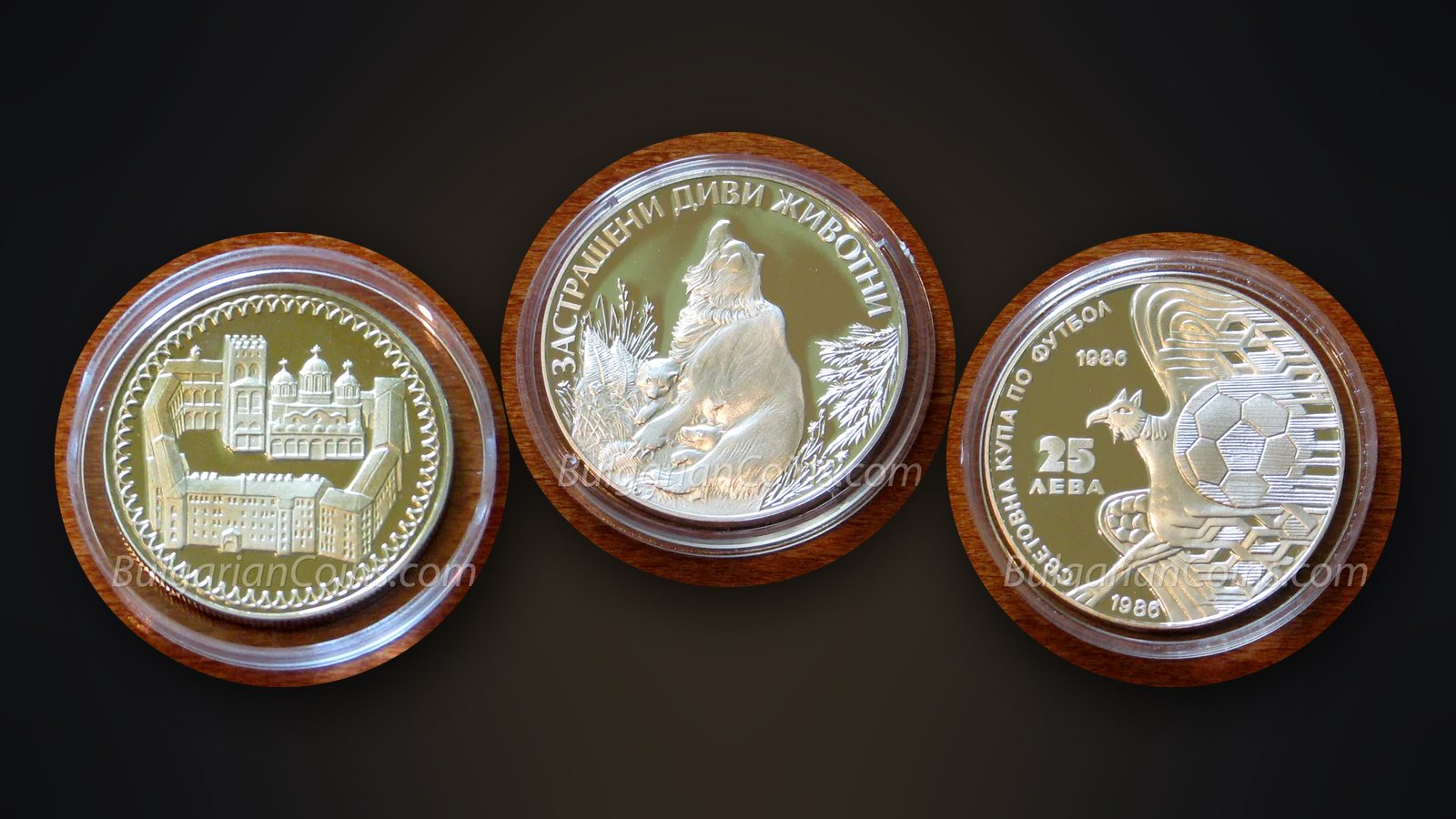
The BNB capsules in which commemorative coins are sold are safe. If a coin is in its original capsule and with its certificate, leave it there.
Dangerous materials
- Soft PVC – the most common enemy.
- Rubber and rubber bands – contain sulphur and leave black spots on silver.
- Ordinary cardboard and newspaper – acidic, release sulphur compounds.
- Wood – oak and other species release organic acids. If you like wooden boxes, look for ones lined with safe trays.
- Self-adhesive 2×2 cards – the glue sometimes creeps towards the coin.
- Dyed fabrics and wool – moisture and sulphur.
How to test unknown packaging
The simplest sign: PVC is soft and flexible, smells of “new plastic” and becomes sticky over time. Mylar and polypropylene crinkle and are stiffer. If in doubt, use the copper wire test: heat a wire until it glows red, touch it to the plastic and hold it back in the flame. A green flame indicates chlorine, and therefore PVC. Do this outdoors and carefully.
Five rules for worry-free storage
- Replace old soft pouches with Mylar or polypropylene.
- Do not keep different metals in one shared bag.
- Add silica gel to the box and keep it at a relative humidity below 50%.
- Check the collection at least once a year.
- Record what is where – cataloguing also helps with insurance.
You will find more about the types of albums and boxes in How to store your coins.