How much are my old Bulgarian coins worth?
A practical guide: how to tell whether the coins in the drawer are small change, silver or a real find
BulgarianCoins editorial team 7 min read
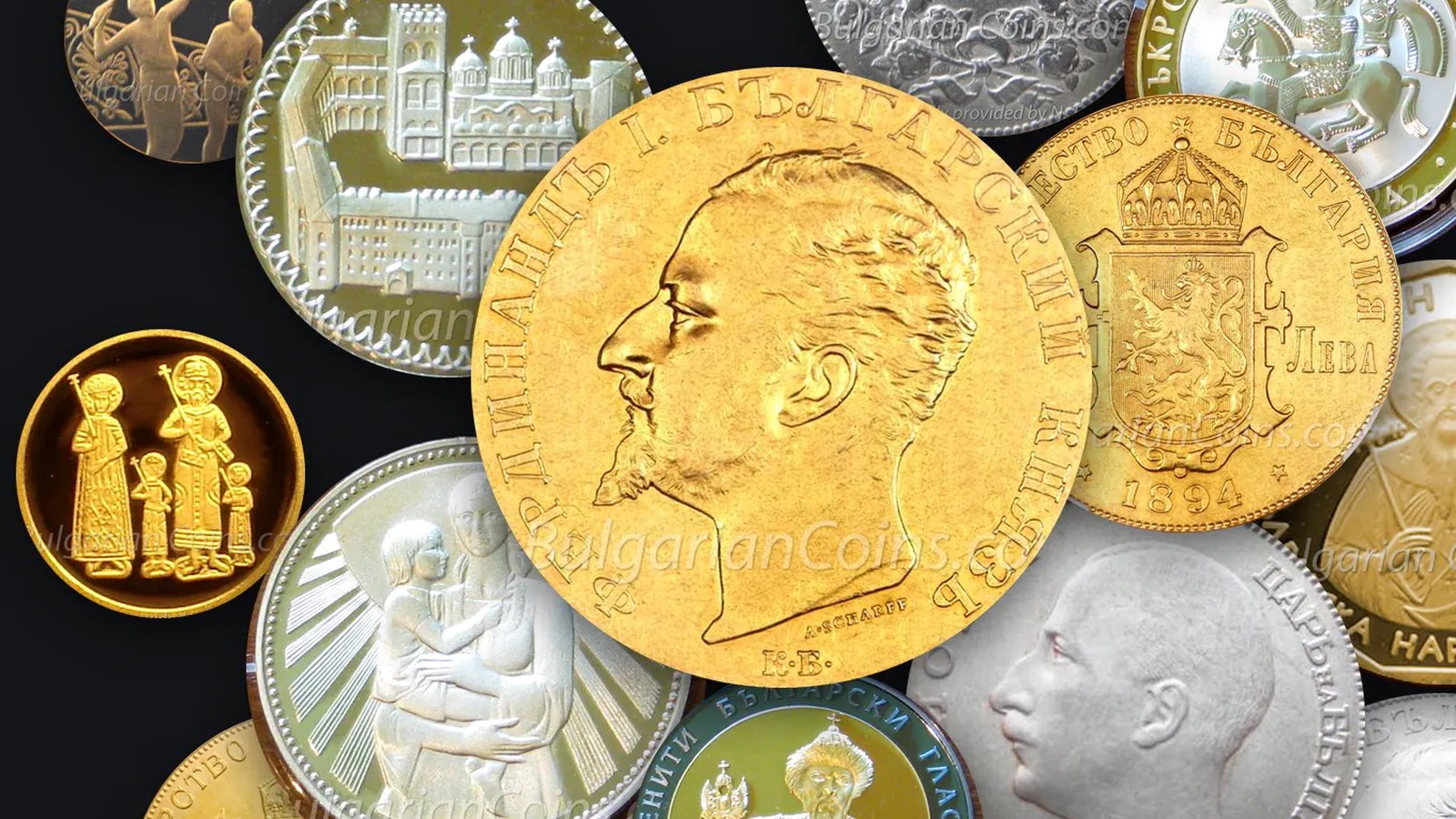
Almost every Bulgarian home has a box or jar of old coins – stotinki from the socialist era, leva from the 1990s, sometimes a heavy silver coin from grandfather. “What are they worth?” is the question we are asked most often. The good news is that the answer can be found fairly quickly if you know what to look at. The bad news is that most coins from the drawer are worth less than we hope, and the few valuable ones are easily ruined by improper cleaning.
This guide will help you sort your coins into three groups: small coins with minimal value, coins worth as much as their metal, and coins with real collector value.
The four things that determine the price
The value of every coin depends on four factors. Remember them, because we will keep coming back to them.
- Year and period. Coins of the Principality of Bulgaria (1881–1908) and the Kingdom of Bulgaria (1908–1946) are as a rule more sought after than those of the People’s Republic of Bulgaria (1946–1990) and the Republic of Bulgaria (after 1991).
- Metal. Gold and silver set a “floor” for the price – a coin cannot be worth less than the metal in it. Copper, nickel and aluminium have almost no such value.
- Mintage and surviving examples. The fewer coins were struck and preserved, the higher the price. You will find the mintage of every coin on its page in the catalogue.
- Condition. The same coin can be worth 5 or 500 euros depending on whether it is heavily worn or looks freshly struck. We will write about grades in detail in a separate article.
Step 1: Identify the coin
Start with the year and face value – they are written on almost every Bulgarian coin. Then look at the coat of arms and the inscriptions:
- “КНЯЖЕСТВО БЪЛГАРИЯ” (Principality of Bulgaria) or a portrait of Prince Ferdinand – a coin of the Principality;
- “ЦАРСТВО БЪЛГАРИЯ” (Kingdom of Bulgaria), a portrait of Tsar Ferdinand or Tsar Boris III – a coin of the Kingdom;
- “НАРОДНА РЕПУБЛИКА БЪЛГАРИЯ” or “НРБ” (People’s Republic of Bulgaria) and a coat of arms with a five-pointed star – a coin of the socialist era;
- “РЕПУБЛИКА БЪЛГАРИЯ” (Republic of Bulgaria) or “БЪЛГАРСКА НАРОДНА БАНКА” (Bulgarian National Bank) and the lions of the coat of arms – a coin from after 1991.
With this information, find the coin in the catalogue by year or through the advanced search, where you can filter by metal, period, mintage, weight and designer. On each coin’s page you will see photos, metal, weight, mintage and, where we have data, an indicative price.
Step 2: Check the metal
If the coin is gold or silver, its value never falls below the value of the metal. The calculation is simple:
pure metal (g) = weight of the coin (g) × fineness / 1000
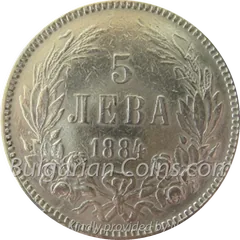
Example: the silver 5 leva coin of 1884 weighs 25 g and is in 900/1000 silver. It contains 25 × 0.900 = 22.5 g of pure silver. Multiply that figure by the current price per gram of silver and you get the floor of its value. The collector price is often considerably higher.
Be careful with the coins of the 1930s: the silver 20, 50 and 100 leva of 1930–1937 are in silver of only 500/1000 fineness, i.e. half their weight is copper. And coins of base metal – copper, nickel, aluminium – have practically no value as metal.
Tip: you will find the weight and fineness of every coin on its page in the catalogue. If your coin weighs noticeably less than stated, it may be heavily worn, damaged or fake.
Step 3: Mintage – which coins are really rare
Mintage is the number of coins struck. In the BulgarianCoins catalogue it is given for most coins, and you can filter by it. A few examples for comparison:
| Coin | Metal | Mintage |
|---|---|---|
| 10 stotinki, 1881 | bronze | 15,000,000 |
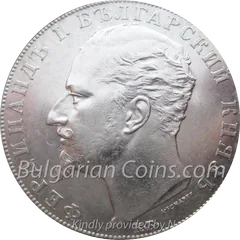
| 2 leva, 1882 | silver 835/1000 | 2,000,000 |
| 5 leva, 1884 | silver 900/1000 | 512,473 |
| 20 leva, 1894 | gold 900/1000 | 100,000 |
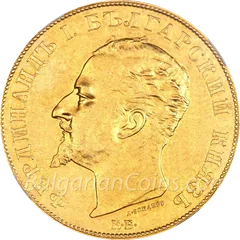
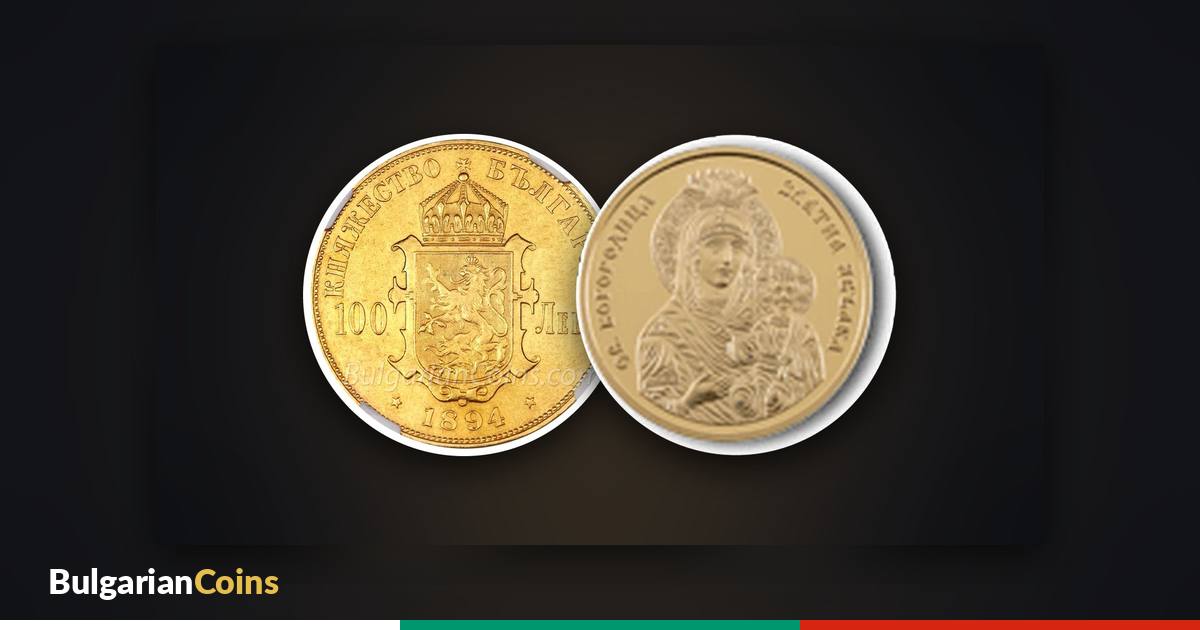
| 100 leva, 1894 | gold 900/1000 | 2,500 |
Coins with mintages of tens of millions, especially from the 1950s to the 1990s, are usually worth little even in good condition – there are simply a lot of them. Coins with mintages of a few thousand, such as the gold 100 leva of 1894 and 1912, are true rarities. With modern BNB commemorative coins the mintages are small (often 3,000–5,000 pieces), but they are almost always perfectly preserved, so their price depends mostly on demand.
Step 4: Assess the condition honestly
Look at the coin in daylight, at an angle and with a loupe. Ask yourself a few questions:
- Are the details clearly visible – the hair, the beard, the leaves of the wreath, the letters?
- Are there scratches, knocks on the rim (edge), holes or traces of soldering?
- Has it been cleaned? An unnatural shine and fine parallel scratches are a sure sign it has been rubbed.
A cleaned coin loses much of its collector value – sometimes more than half. So never clean an old coin before you know what it is. You will read more about this in our guide to caring for coins.
Which coins are usually NOT worth much
Let us be honest – it saves disappointment and pointless listings:
- The stotinki and leva of 1962–1990 – mass mintages, usually in base metal. In normal condition they are worth a token amount; exceptions are some years and varieties in excellent condition.
- The coins of 1992–1997 – the period of high inflation; they were struck in large quantities and quickly went out of use.
- The circulation coins of 1999 to 2025 – since 1 February 2026 they are no longer legal tender, but the BNB exchanges them free of charge and with no deadline at the rate of 1.95583 leva to 1 euro. For most of them exchange is the best solution. See what to do with leftover leva and stotinki.
- Souvenir medals and tokens that look like coins but were not issued by the BNB.
Which coins are worth checking carefully
- The coins of the Principality and the Kingdom (1881–1946), especially the silver and gold ones.
- Gold coins of any period – they always have a value at least equal to the gold in them.
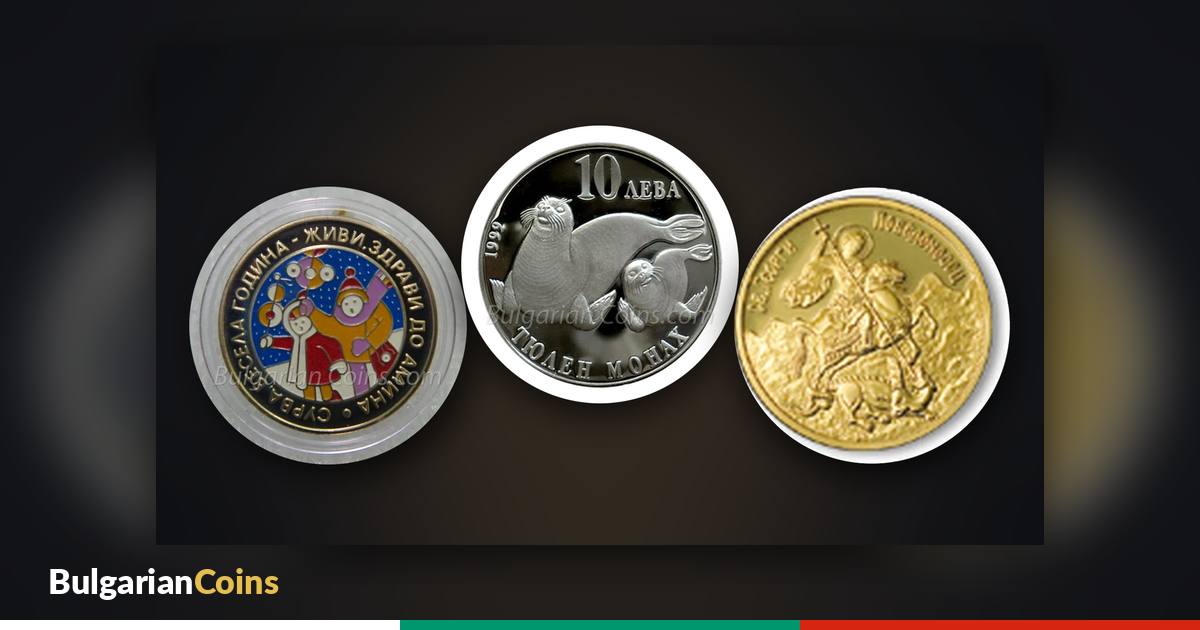
- BNB commemorative coins in their original capsule and with a certificate – from 1965 to today. Many of them trade above their issue price.
- Coins with a minting error – an off-centre image, a double strike, a wrong edge. They are rare and sought after; read “The defect effect”.
- Coins with varieties – for example the 50 stotinki of 1916 with a large or small beaded circle along the rim.
How to check the real price
Catalogue prices are a guide, not a promise. Here is how to get a realistic idea:
- Check the coin in BulgarianCoins market prices and on its page in the catalogue.
- Look for sold, not just listed, coins on online platforms and at auctions. The listed price is only what the seller wishes for.
- Compare the condition of your coin with the ones sold – the difference between “good” and “excellent” condition is often many times over.
- For valuable coins, ask for a valuation from two independent dealers or numismatists. If the two valuations differ drastically, seek a third opinion.
What NOT to do
- Do not clean, polish or rub the coins.
- Do not take commemorative coins out of their capsules – the BNB explicitly recommends that the capsule not be opened.
- Do not sell a whole inherited collection at once to the first person who offers you a price “by the kilo”.
- Do not believe listings that offer huge sums for ordinary coins – they are either mistakes or an attempted scam.
In short
The value of an old Bulgarian coin is determined by its year, metal, mintage and condition. Most coins from the socialist era and recent decades are worth a token amount or their face value on exchange, but the silver and gold coins of the Principality and the Kingdom, BNB commemorative coins and error coins can be worth considerably more. Find your coin in the catalogue, check the metal and mintage, assess its condition honestly, and only then think about selling.