What to do with leftover lev coins after the euro
Exchange, collect or sell – which is best for the coins left over after 1 February 2026
BulgarianCoins editorial team 5 min read
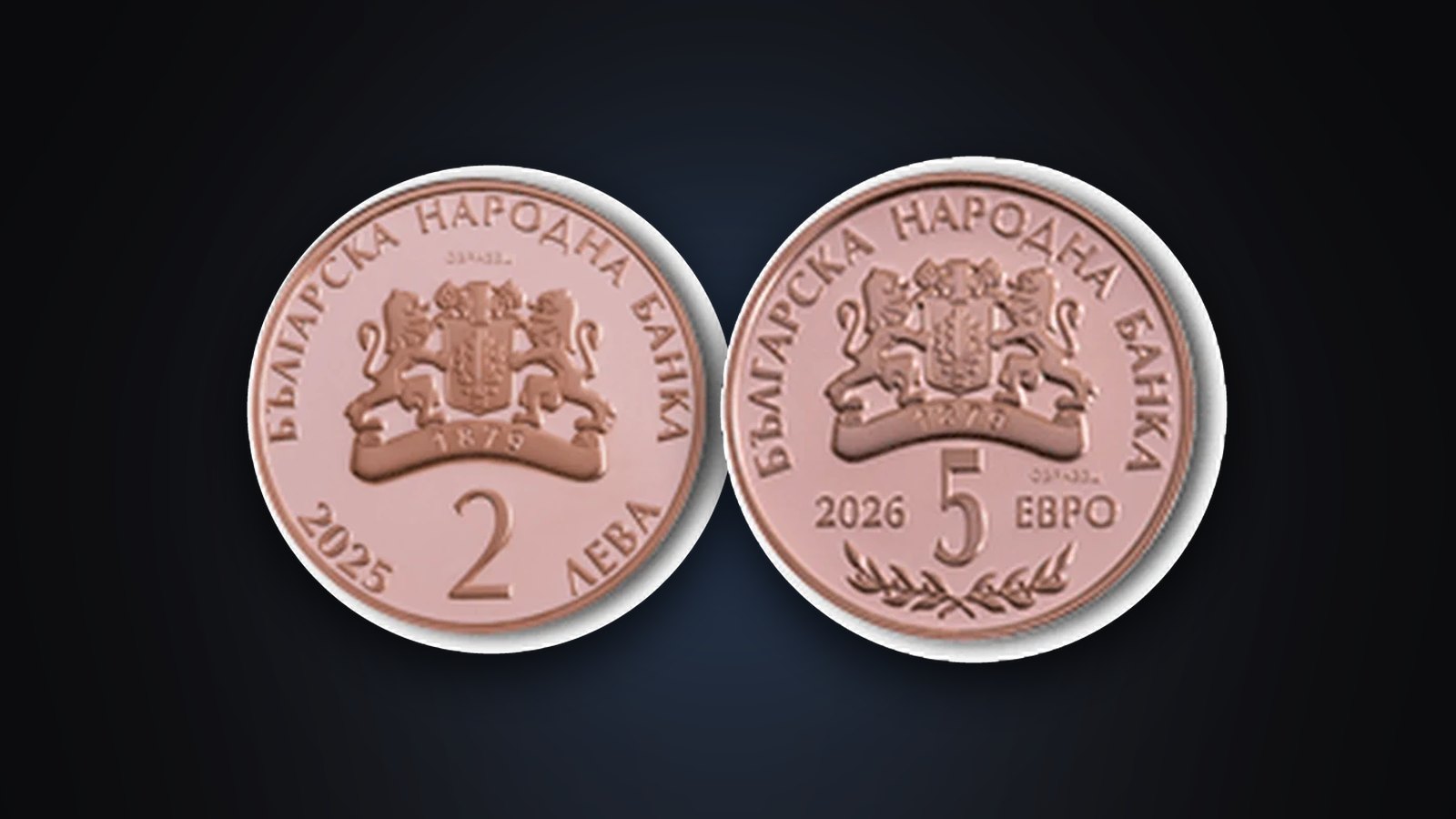
Since 1 February 2026 the euro has been the only legal tender in Bulgaria. The one-month period of dual circulation ended on 31 January, and on 30 June 2026 the six-month period during which banks were obliged to exchange leva free of charge also expired. Still, many homes have lev coins left over – in jars, piggy banks, purses and old collections. What should you do with them?
You have three options: exchange them, keep them as a collection or sell the ones that have collector value. Most often the right answer is a combination of all three.
Exchange: free and with no deadline at the BNB
The most important thing to know: the Bulgarian National Bank exchanges leva into euro free of charge, in unlimited amounts and with no time limit at the official rate of 1.95583 leva to 1 euro. This applies to both banknotes and circulation coins, including stotinki.
Exchange takes place in the BNB’s buildings and at the regional centres of Cash Services Company AD in Sofia, Plovdiv, Burgas, Varna and Pleven. It does not matter whether you bring 5 leva or 5,000 leva in coins.
After 30 June 2026 commercial banks and Bulgarian Posts are entitled to charge a fee for the exchange, and some banks do not accept coins free of charge at all or require the amount to be paid into an account. So if you have a large quantity of coins, the BNB is the safest and most cost-effective option.
Practical tip: sort the coins by face value and count them in advance – processing a large quantity of coins takes time. The lev coins exchanged are those issued after the 1999 denomination – from 1 stotinka to 2 leva.
What the coins are actually worth when exchanged
The rate is fixed and the calculation is simple: the amount in leva ÷ 1.95583 = the amount in euro. For example:
| In leva | In euro |
|---|---|
| 1 stotinka | ≈ €0.005 |
| 50 stotinki | ≈ €0.26 |
| 1 lev | ≈ €0.51 |
| 2 leva | ≈ €1.02 |
| 10 leva in coins | ≈ €5.11 |
| 100 leva in coins | ≈ €51.13 |
Stotinki are worth little individually, but a full piggy bank can turn out to be quite a decent sum.
Which coins NOT to exchange
Before you take everything to the bank, spend a few minutes looking through the coins. Some are worth more as collector’s items than at face value.
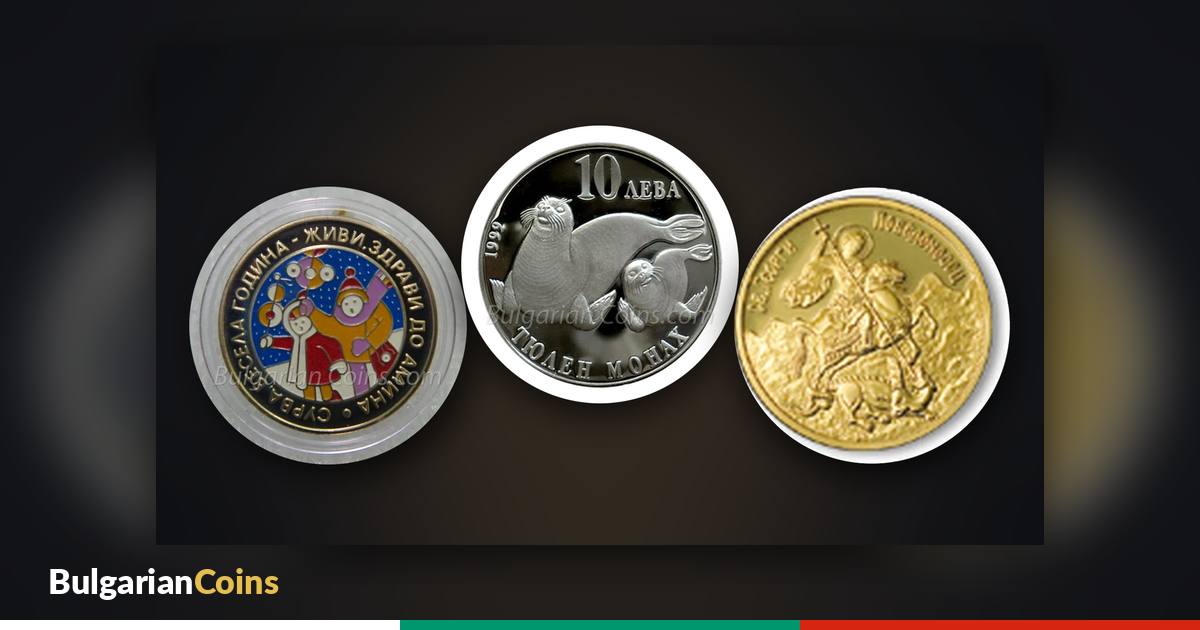
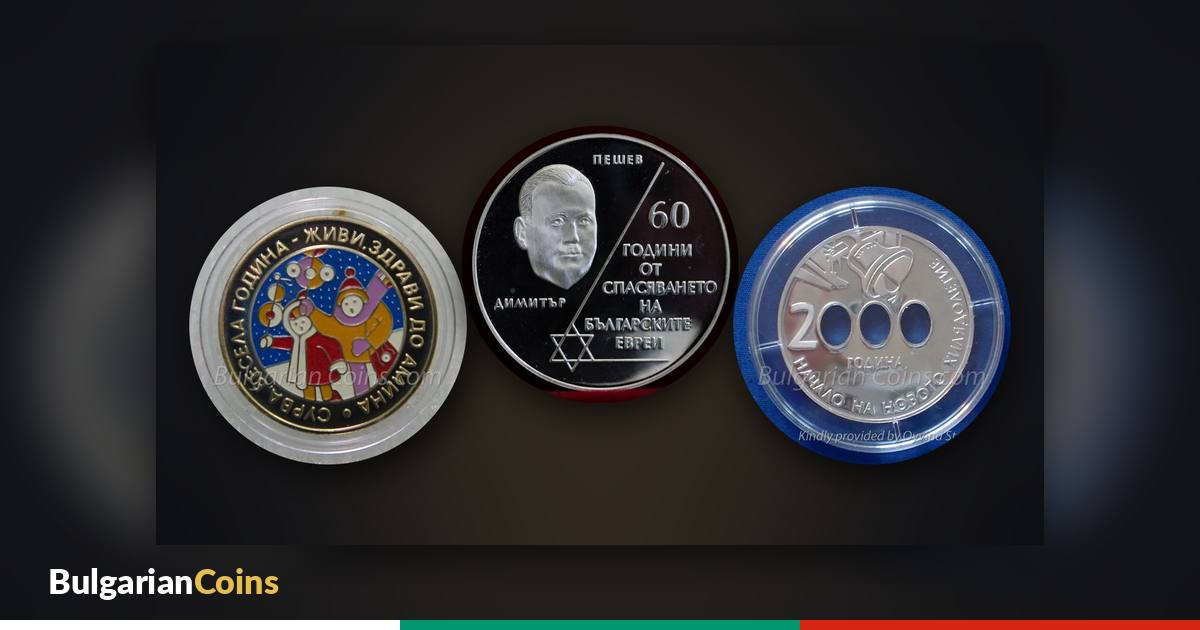
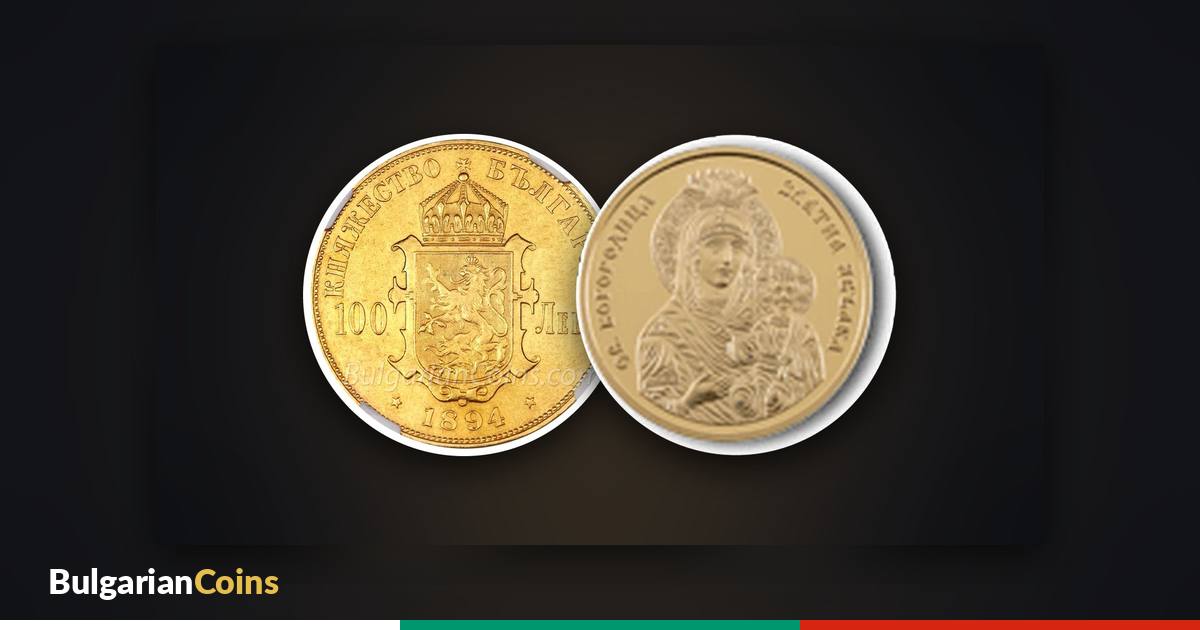
- BNB commemorative and collector coins – the silver, gold and copper coins in capsules with a certificate. They were never meant for payment, and their market price is usually many times their face value. Do not exchange them – check them in the catalogue.
- 1999 coins in excellent condition and complete year sets, especially in original BNB packaging.
- Coins with visible errors – a doubled image, an off-centre strike, a clipped planchet, a wrong edge. See “The defect effect”.
- Coins from before the 1999 denomination – they have long ceased to be money, but some have collector value. Check them by year in the catalogue.
- Silver and gold coins of any period – they are worth at least the value of their metal.
Keep the last leva as a collection
The lev was the Bulgarian currency from 1881 to 2026 – a full 145 years. The last series of circulation coins, struck from 1999 to 2025, is now a closed page of history, and that makes it a wonderful basis for a collection.
Here are a few ideas:
- A complete set of the last series. Collect one coin of each face value: 1, 2, 5, 10, 20 and 50 stotinki, 1 lev and 2 leva. Choose the best-preserved ones you can.
- A set by year. The same coin was struck in different years. A “one from every year” collection is a challenge that costs almost nothing but takes patience.
- “The last and the first”. Place next to the last leva the first euro coins with the Bulgarian national side – 1, 2, 5, 10, 20 and 50 euro cent, 1 and 2 euro. It is a collection that, years from now, will tell the story of the great change.
- A gift for a child or grandchild. An album with the last leva and the first euro is a gift that teaches history and can be the beginning of a real hobby.
Store the collection in an album or PVC-free capsules, in a dry place. Do not clean the coins – even ordinary circulation coins lose their appeal after rubbing.
Selling: when it makes sense
Selling only makes sense for coins with real collector value – BNB commemorative coins, silver and gold, error coins or rare years in excellent condition. For ordinary circulation coins, exchange at the BNB is almost always more profitable than selling.
Before you sell:
- check the coin in market prices and in the catalogue;
- compare with sold coins, not just listed ones;
- do not accept “by the kilo” offers for mixed coins without having looked through them;
- be wary of listings promising thousands of euros for ordinary coins from 1999–2002 – in the vast majority of cases these are unrealistic expectations.
We will also write in detail about what old Bulgarian coins are worth and how to sell a collection at a fair price.
In short
Do not throw away or hastily sell your old leva and stotinki. Exchange ordinary circulation coins free of charge and with no deadline at the BNB at the rate of 1.95583 leva to 1 euro. Check commemorative and collector coins, silver, gold, error coins and those from before 1999 in the catalogue – they may be worth considerably more. And keep a few of the last leva: years from now they will be a memento of a currency that was ours for 145 years.