Mules and wrong-planchet coins: what to look for in Bulgarian coins
The rarest errors – how they arise, what they look like and how not to fall for a fake “find”
BulgarianCoins editorial team 3 min read
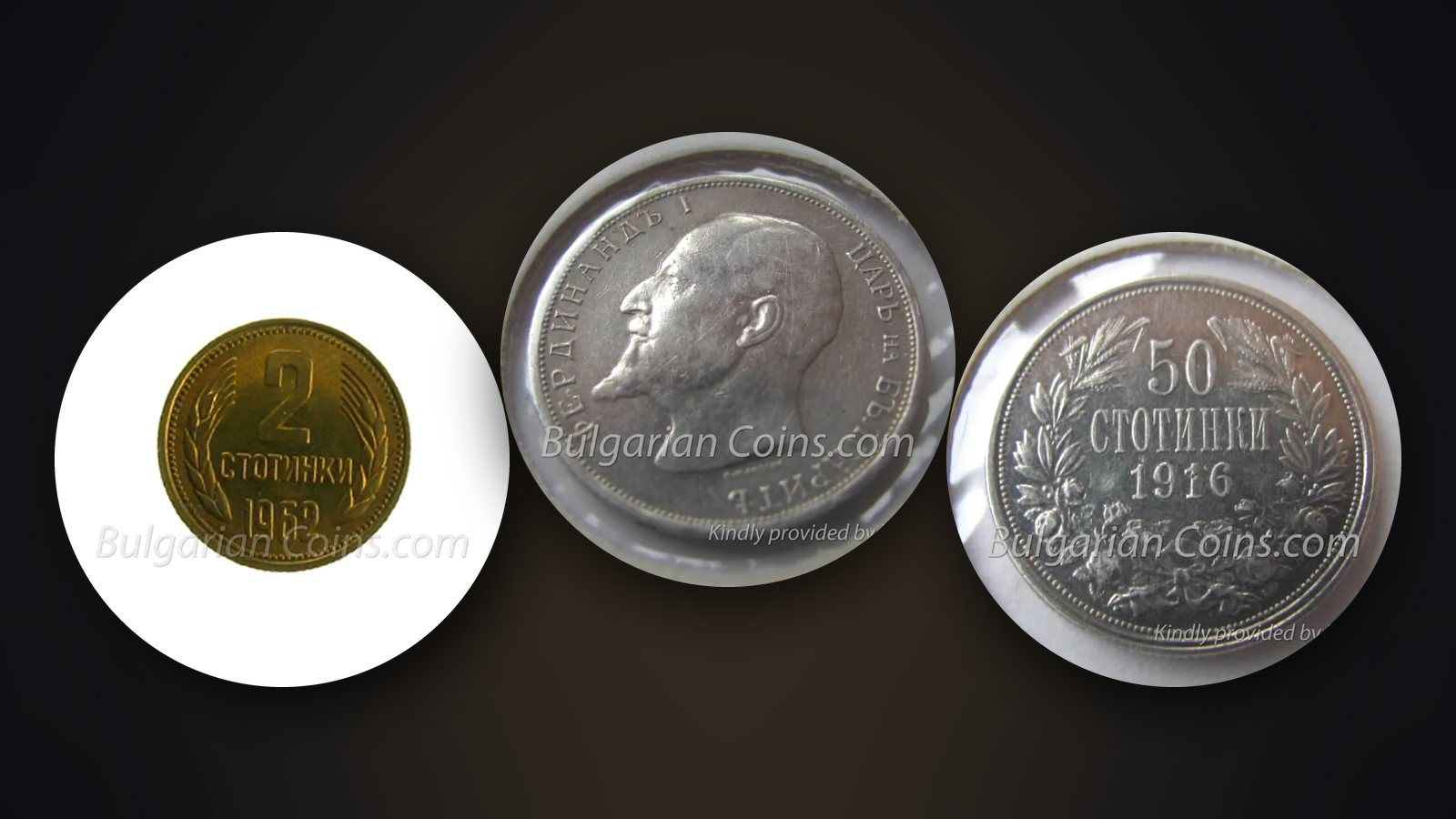
Among error coins there are two categories collectors seek most – mules and coins struck on the wrong planchet. They are very rare, because they require a major lapse in the mint’s quality control.
What a mule is
A mule is a coin struck with two dies not meant for each other. For example the obverse of one coin and the reverse of another, or a reverse from a different year. The name comes from the mule – a cross between two species.
How does it happen? At mints that strike many different coins, dies are changed often. If a worker fits the wrong die and the mistake goes unnoticed, mules are struck.
How to recognise a mule: compare both sides with the photos in the catalogue. If the two sides are from different coins, you have either a mule or a counterfeit.
What a wrong planchet is
The coin is struck on a planchet intended for another coin:
- A smaller planchet – part of the design is missing at the edge.
- A larger planchet – the design is in the middle, with a blank field around it.
- A planchet of another metal – for example a copper-nickel coin on a bronze planchet.
- A planchet for a foreign coin – when the mint also strikes for other countries.
How to recognise it: weigh the coin and measure its diameter. If the weight and size differ significantly from the catalogue data and the design is complete and clear, you may have a wrong planchet.
How rare they are
Bulgarian mules and wrong-planchet coins are extremely rare. Published cases are isolated. So their price is set individually and can be hundreds or thousands of euros. For such a coin, a certificate from PCGS or NGC is almost essential.
Fake “errors”
Precisely because they are valuable, these errors are faked:
- Worn or filed-down coins presented as a “smaller planchet”. Sign: the edge is uneven, the edge pattern is missing or damaged.
- Plated coins – a copper coin presented as “of another metal”. Sign: the plating peels at the edge.
- Artificial mules – two halves of different coins glued together. Sign: a seam along the edge, unusual weight.
- Replicas – entirely new coins made to look like an error.
See also Is my coin an error?.
The tools
To check a mule or a wrong planchet you need:
- An accurate scale – to 0.01 g.
- Calipers – for the diameter and thickness.
- A loupe – for the details.
- A magnet – to check the metal.
More in The collector’s essential tools.
If you think you have such a coin
- Do not clean or treat it.
- Take good photos of both sides and of the edge.
- Weigh and measure it.
- Compare it with the catalogue.
- Seek the opinion of an experienced collector or a grading company.
More about the types of error – in Error coins.