Coins of the war years: metal shortages and substitute alloys
The zinc of 1917, the aluminium of 1923 and the iron of 1941 and 1943 – coins born of war
BulgarianCoins editorial team 3 min read
War can be seen not only in history textbooks but also in your pocket. When copper, nickel and silver are needed for weapons, states strike coins from whatever is left. The Bulgarian coins of 1917 to 1943 tell exactly such a story.
1912–1918: the end of silver
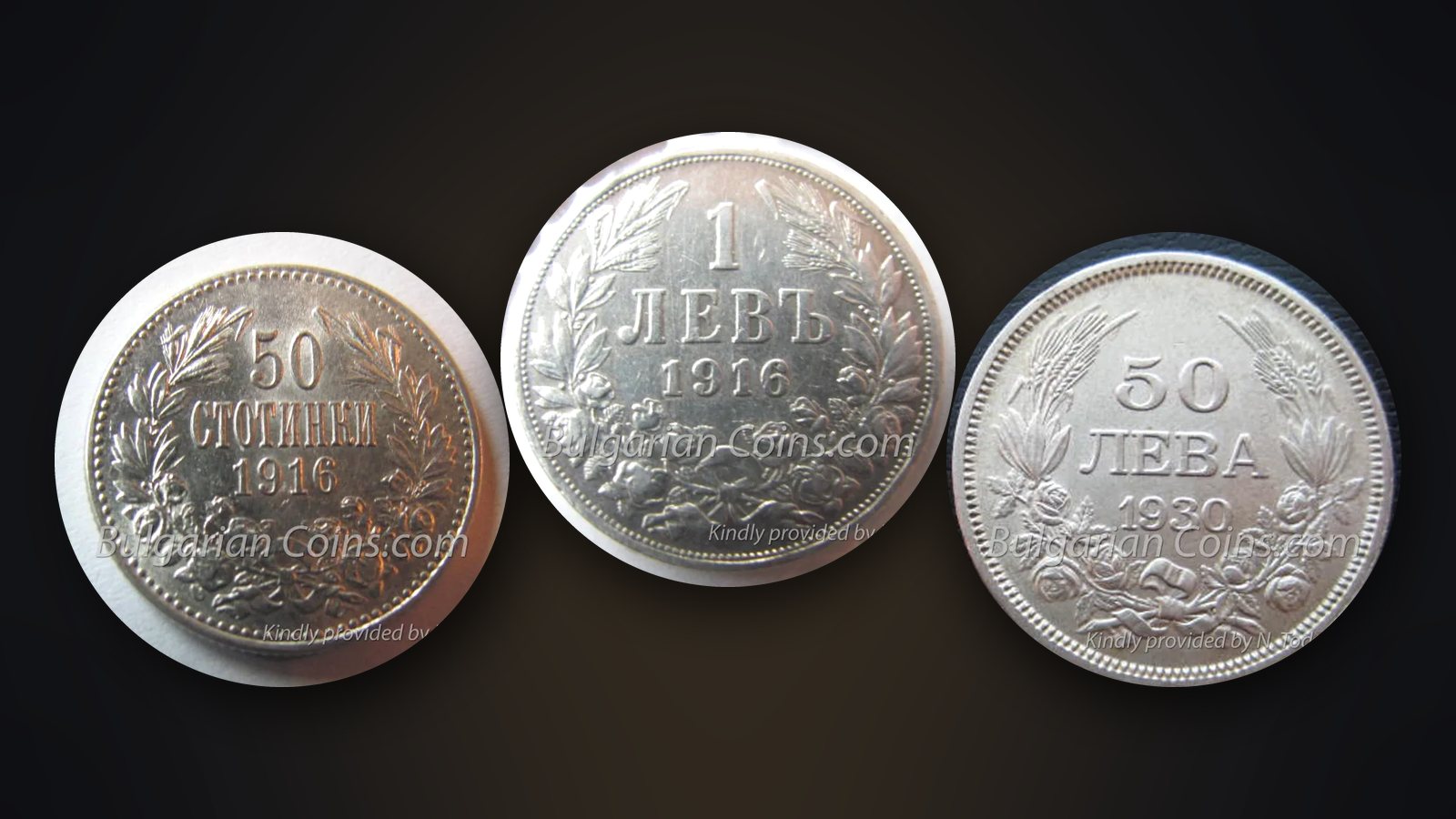
After the Balkan Wars and during the First World War, silver disappeared from circulation. The last silver coins are from 1916. People hoarded them, because their metal was worth more than their face value.
1917 – the stotinki of 5, 10 and 20 stotinki are in zinc. The mintages are huge – over 50 million each for the 5 and 10 stotinki. Zinc is soft and corrodes easily, so most surviving coins are worn and darkened.
1923: aluminium
After the war, inflation was high. In 1923 coins of 1 lev and 2 leva were issued in aluminium. They are very light – 1.5 and 2.5 g. Aluminium is cheap but scratches easily. The 1923 coins in excellent condition are rarer than their mintages suggest.
1925–1940: copper-nickel
In 1925 the leva were already copper-nickel, and in 1930 silver coins of a low 500/1000 fineness appeared too. In 1940 the copper-nickel 20 and 50 leva were issued – the last coins before iron.
1941 and 1943: iron
During the Second World War, copper and nickel were strategic raw materials. The coins of 1941 – 1, 2, 5 and 10 leva – and of 1943 – 2, 5, 10 and 50 leva – are in iron or steel.
| Coin | Metal | Mintage | Feature |
|---|---|---|---|
| 10 leva 1941 | iron | 2,200,000 | smallest mintage of the iron coins |
| 10 leva 1943 | iron | 25,000,000 | common |
| 50 leva 1943 | iron | 15,000,000 | highest face value |
| 5 leva 1941 | iron | 15,000,000 | common |
Iron rusts. Most of the coins from these years found today are covered in rust or spots. That is why examples without signs of circulation are a real rarity.
Why the 10 leva 1941 is a star
The 10 leva 1941 has the smallest mintage of the iron coins – 2.2 million. An ordinary worn coin is offered for a few dozen euros. But single certified coins in MS 62–63 are offered for €12,000–15,000. It is one of the most striking examples of how much condition matters. See How condition sets the price and The 10 most expensive Bulgarian coins.
How to store coins from the war years
- Keep them dry. Iron and zinc corrode in damp conditions. Use silica gel.
- Do not clean them. Cleaned rust leaves marks and lowers the price. See Should you clean coins.
- Do not mix them with silver and copper. Different metals can affect each other in damp conditions.
History in metal
The coins of the war years are a cheap and accessible way to collect history. They show how war affects every home – even pocket money. See also the period Kingdom of Bulgaria.