Fake BNB certificates and packaging
How to check the certificate, capsule and box of a commemorative coin – and why a “full set” does not always mean an original
BulgarianCoins editorial team 2 min read
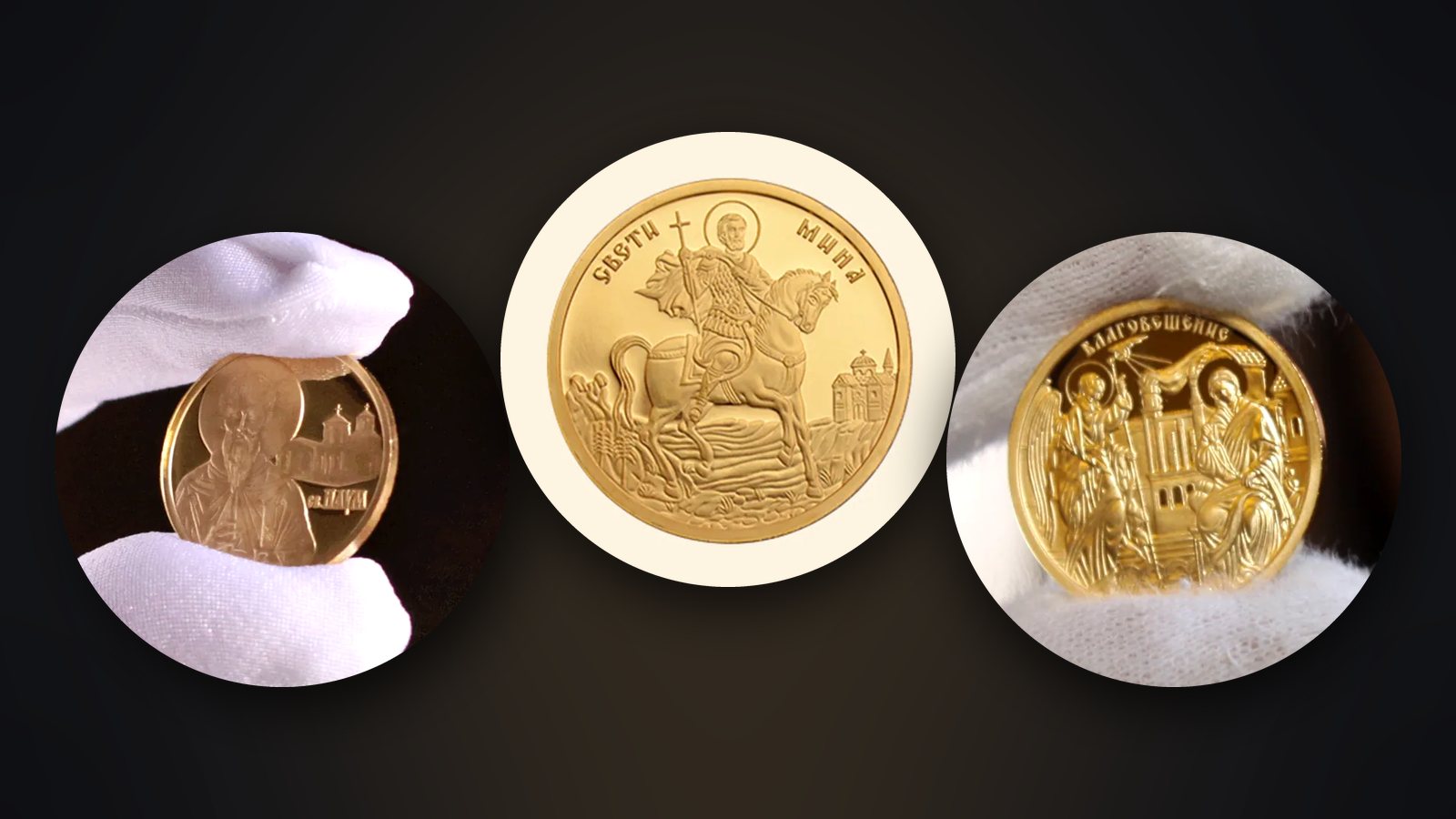
A BNB commemorative coin with its original capsule, box and certificate is worth more than the coin on its own. That is why packaging and certificates are also targets for fraud.
What the original certificate contains
A BNB certificate usually contains:
- The name and face value of the coin.
- The metal, fineness, weight and diameter.
- The quality – proof or brilliant uncirculated.
- The mintage.
- The authors of the design.
- A signature and often a serial number.
Compare all the details with the coin’s page in our catalogue. See also The certificate and packaging of BNB coins.
The schemes
A replica in original packaging
The most common scheme. The fraudster buys an empty box and certificate – they are sold separately – and puts a replica in them. The buyer sees a “full set” and does not check the coin.
Check: always check the coin itself – weight, diameter, details.
A certificate from another coin
The certificate is original, but from another coin or another year. Sometimes the difference is just one digit.
Check: compare the name, year and details on the certificate with the coin.
A copied certificate
The certificate is a photocopy or has been reprinted.
Check: the original is on quality paper, with sharp printing. A copy often has blurred lines, wrong colours or different paper.
A repeated serial number
If the certificates are numbered, the same number cannot appear with two coins.
PCGS and NGC slabs
Fake slabs of the major grading companies exist and are sold online. They contain replicas, and the labels look almost like the originals.
Check:
- Enter the number from the label in the verification database on the company’s website.
- Compare the details and the photo, if there is one.
- Examine the slab – originals have precise edges and an engraved logo; fakes often have rough spots, the wrong font or a loose coin.
See Should you send coins to NGC or PCGS.
The capsule
The original capsule is tightly closed and of the exact size. If the capsule is scratched, cracked or has obviously been opened, the coin may have been swapped or cleaned.
A coin without a certificate
A coin without a certificate is not necessarily fake. Certificates get lost. But the price should be lower – usually by 10–20%, and more for expensive coins.
Checklist
| What | How |
|---|---|
| The coin | weight, diameter, details |
| The certificate | details, paper, printing, number |
| Match | coin = certificate = box |
| The capsule | intact, unopened |
| The slab | number in the company’s database |
In short
Never buy a “full set” just for the packaging. Check the coin first, then the documents. See also How not to be scammed online and Chinese replicas.