The first Bulgarian coins of 1881: the birth of the stotinka
How the Principality of Bulgaria created its lev, why the first coins were struck in Birmingham and what the collector should know about them
BulgarianCoins editorial team 3 min read
After the Liberation in 1878, dozens of currencies were in use in the Bulgarian lands – Ottoman grosh and mecidiye, Russian roubles, Austrian florins, French francs, Romanian lei. Merchants calculated at rates that changed from town to town. The new state needed money of its own, and its own money was also a symbol of independence.
The law of 1880
On 4 June 1880 the Second Ordinary National Assembly adopted the “Law on the Right to Strike Coins in the Principality”. It created the national currency – the lev, divided into 100 stotinki, as the BNB and Profit.bg recall. The name comes from the lion (lav) – the ancient symbol of Bulgarian statehood – and the word “stotinka” was coined specially for the new currency.
The lev was built on the standard of the Latin Monetary Union: one lev corresponded in weight and fineness to one French franc. This made Bulgarian silver coins understandable to merchants all over Europe.
Birmingham, 1881
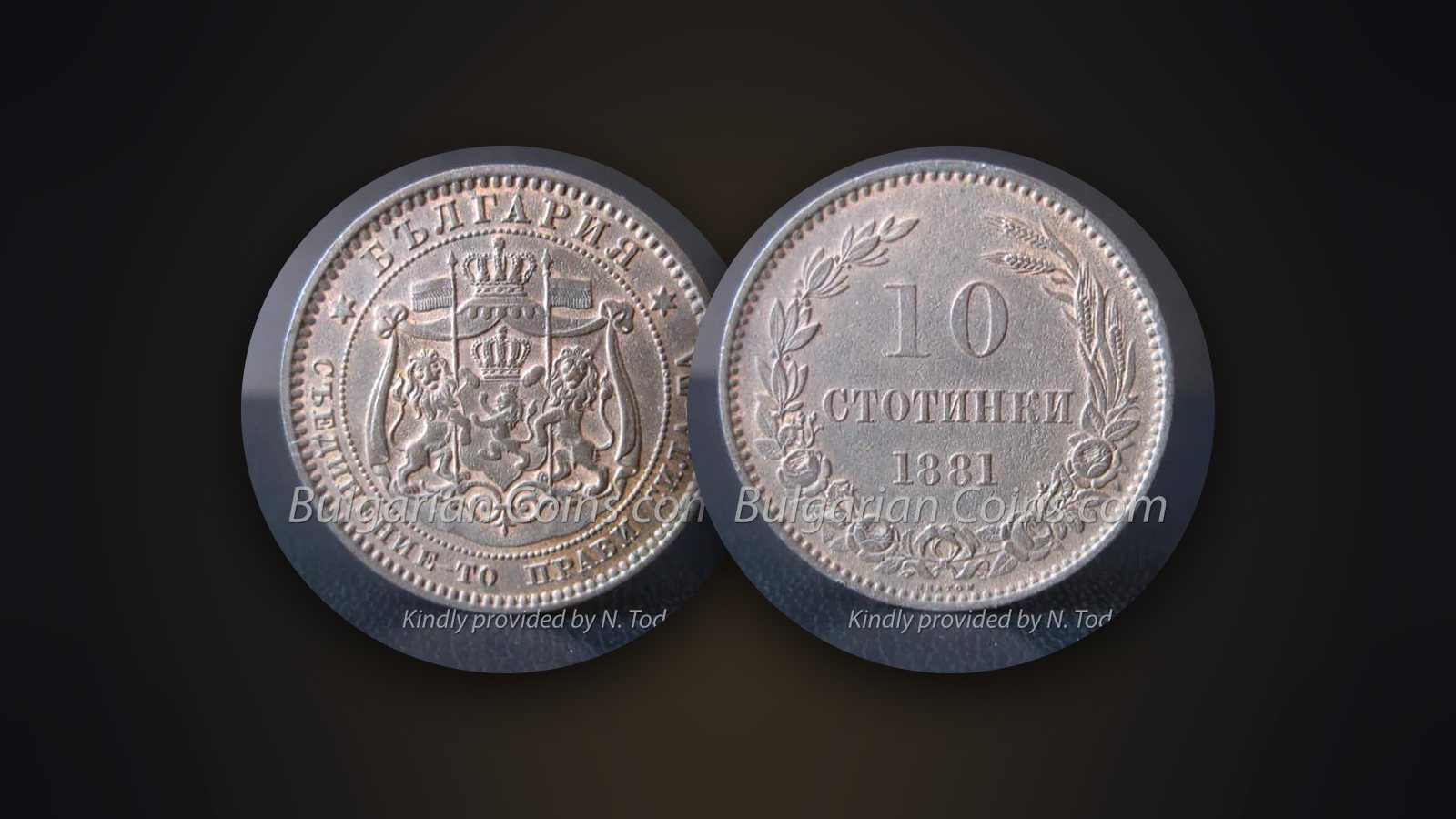
Bulgaria had no mint of its own. So the first coins were ordered abroad. In 1881 the English firm Ralph Heaton & Sons in Birmingham struck the first coins of the Principality: 2, 5 and 10 stotinki (BTA). The following year the first silver 1 and 2 leva coins were struck in Russia.
| Coin | Metal | Weight | Diameter | Mintage |
|---|---|---|---|---|
| 2 stotinki 1881 | bronze | 2 g | 20 mm | 4,996,345 |
| 5 stotinki 1881 | bronze | 5 g | 25 mm | 10,000,000 |
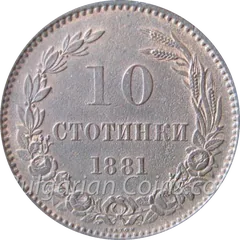
| 10 stotinki 1881 | bronze | 10 g | 30 mm | 15,000,000 |
The coins follow a simple logic – 1 gram per stotinka. The 10 stotinki weighs exactly 10 grams.
What is depicted
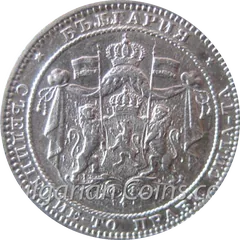
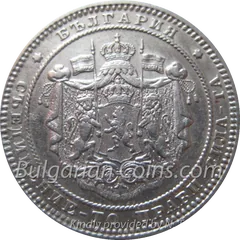
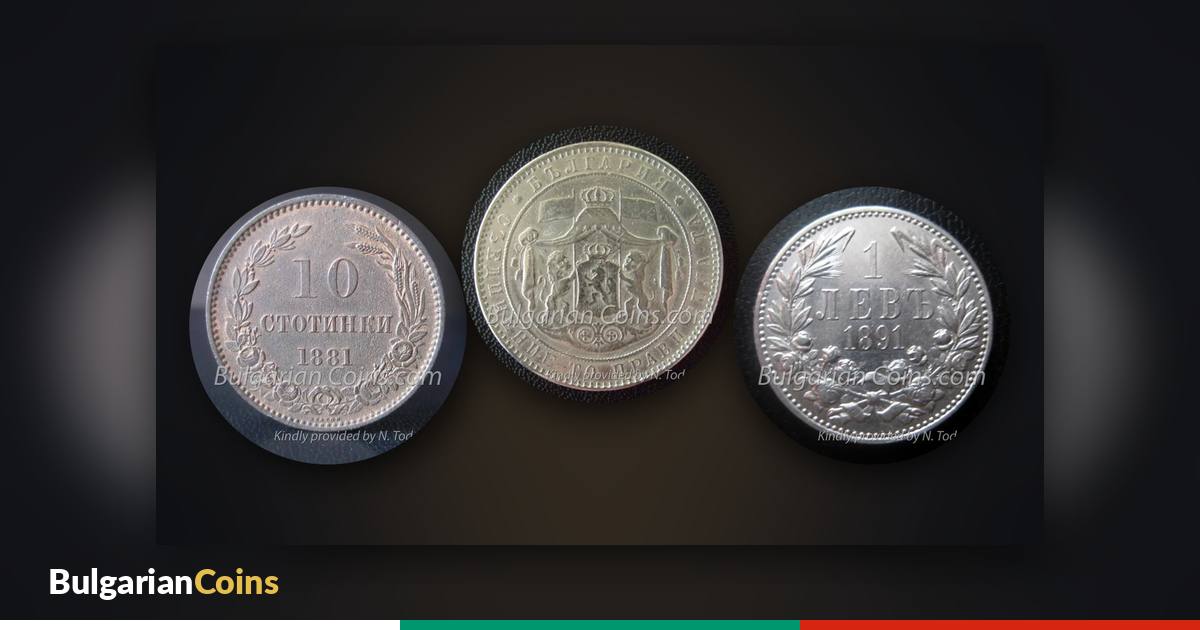
The obverse bears the state coat of arms – a crowned lion in a shield, with the inscription “КНЯЖЕСТВО БЪЛГАРИЯ” (Principality of Bulgaria). The reverse has the face value and the year in a wreath. The design is restrained and classical, close to the coins of other European states of the time. A portrait of the prince appeared later, on the silver and gold coins.
Why they interest collectors
- Symbolic value. These are the first coins of the modern Bulgarian state. A collection of Bulgarian coins usually begins with them.
- Affordable, but not in excellent condition. The mintages run to millions, so worn examples are easy to find. Coins in excellent condition, with original bronze lustre, are considerably rarer and more expensive.
- Bronze is temperamental. Copper alloys darken and are easily damaged by moisture and improper cleaning. An 1881 coin with a natural brown patina is almost always more valuable than one “cleaned” to pink. Before you do anything, read why you should not clean coins.
What came next
The stotinki of 1881 open the story of the lev, which continued for nearly a century and a half. It runs through the silver 5 leva of the Principality, the gold coins of Tsar Ferdinand, the mass-produced coins of the 1930s and the stotinki of socialist Bulgaria. It ends with the last coins of 2025 – in detail in the article From the lev to the euro.
All the coins of the Principality of Bulgaria, with mintages, specifications and photos, can be found in the Principality of Bulgaria (1879–1908) section of the catalogue.