Unfair practices in Bulgaria’s physical gold and silver market
Or: which traps to watch out for when you entrust your future to someone
Tavex 11 min read
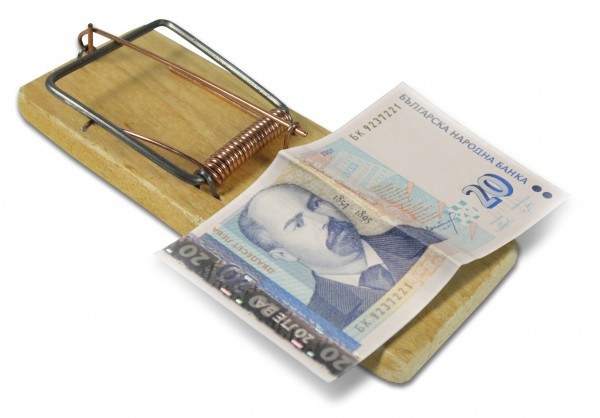
Over the past ten years or so, investment gold and silver have stood out as some of the most profitable, liquid and low-risk investments on the world’s markets. In Bulgaria, the role of these two precious metals as part of people’s investment portfolios has only started to gain popularity in the last few years (since the start of the financial crisis). Quite naturally, the growth of a market brings a number of new companies, organisations and institutions competing to offer these two investment products. Competition is an entirely natural market mechanism that works in favour of end customers, offering them clearer, more transparent and more accessible pricing, friendlier and more courteous service, and fairer and more professional advice. Unfortunately, however, when a market is relatively new and unfamiliar to the public, a number of unfair practices quickly appear that deliberately or unintentionally mislead or misinform customers and put them at a disadvantage. The emergence of these practices is the reason for this article. We hope it will shed light on the most commonly used sales tricks and help potential investors make the most informed decision possible about the future of their savings.
-
“Our prices for investment gold are higher because we issue a certificate of authenticity.” This is one of the most common misconceptions on the investment gold market. Certificates of authenticity for gold and silver products are provided by the manufacturer itself (the refinery or mint), not by the dealer. While most gold bars have their own unique serial number and come in vacuum-sealed packaging that clearly states the manufacturer, the fineness and the name of the technical expert who certifies the details, the case of gold coins is different. Many coins do not come with certificates of authenticity because the manufacturer does not offer them; the guarantee of a coin’s authenticity is the quality and complexity of the minting itself, and the fact that the coins are legal tender in their countries of origin. Internationally, a standard for trading investment gold coins has become established over time under which certificates of authenticity are not needed and are not offered by manufacturers. As a rule, only encapsulated or collector coins come with such a certificate (see the photo – Canadian Maple Leaf 99999). Any certificate not issued by a refinery or mint is, broadly speaking, a worthless piece of paper and rather a speculation by the seller. Think about it: if it were so easy to counterfeit a coin, imagine how much less effort it takes to issue such a certificate, and what it would be worth. Put another way: if the Austrian Mint does not issue a certificate for its “Vienna Philharmonic” coins, why should the dealer issue one, what exactly does it guarantee, and how could adding an unnecessary piece of paper make the investment product more expensive?
-
“The gold we sell is more expensive because the coins are brand new and come straight from the mint.” This practice is very unfair to customers because it spreads needless fear. Its aim is to make you pay a much higher price for the same product. Investment coins have certain characteristics on the basis of which dealers are obliged to buy them back. If customers have stored them properly, the coins are as good as new anyway, even if they belonged to another customer before. You will understand that if all of a dealer’s coins come straight from the mint, that dealer does not buy them back – or at least not as an investment product, but more cheaply, as scrap gold. Such dealers usually do not know the individual storage requirements of investment products and do not tell their customers how each product should be stored. A typical example is that some dealers sell “Chinese Panda” coins in capsules, even though the “Chinese Panda” must be kept in the original silicone packaging in which it arrives from the mint – putting it in a capsule destroys its investment value (see the photo – the silicone packaging of the “Chinese Panda”). Secondly, this practice is misleading in another respect too: when a dealer tells you that the products he sells are brand new, he is clearly hinting that the same products at his competitors are old and unsuitable for investment, which is pure deception. The truth is quite different: every reputable dealer of investment gold maintains business relationships with mints and refineries from which it receives deliveries of brand-new products. In that sense, it sells both brand-new investment products and products bought back from customers that meet the strict requirements for storage and buy-back. Put simply, any claim by a dealer that “our coins are more expensive because they are brand new” is, first, an attempt to tarnish the competition’s name and discourage the customer from looking for better terms, and second, a very flat and completely false argument for a higher price.
-
“Let’s meet in a café or restaurant.” Investment gold and silver are financial assets, and trading them professionally requires the appropriate means. If you are offered a meeting outside the dealer’s premises because there are none, expect nothing good. Either it is an outright scam, or they are trying to mislead you by selling you an illiquid product that they will later not buy back at a fair price, or they will sell you damaged products whose buy-back price will be far lower.
-
“Don’t worry that we only have a selling price – you will sell a long time from now, so it doesn’t matter that we have no buying price.” This is a deception on a smaller scale, but a deception nonetheless. The idea is very simple. The seller knows that an investment sometimes has to be liquidated much earlier than planned, and knows that you will first turn to whoever sold you the product. That is when you realise your product is not liquid, because no dealer on the market has a current market price for it. In the end, the same dealer who sold you the product will offer to buy it at prices below the exchange price (that is, as scrap gold rather than as an investment product, which is bought at levels close to the exchange price and usually above it). People who want to buy something extremely cheaply often fall for such mistakes, not realising that one day they will have to sell it, and so put themselves in a losing position.
-
“The product we are selling you is fully liquid anywhere in the world” (but the seller has no current buy-back price that changes hourly). This is a serious deception that leads to serious losses, especially for larger investors. The product may indeed be liquid all over the world, but when there is no one to buy it back at a fair market price at any moment, it automatically turns from liquid into undervalued and hard to sell. Do not be tempted to buy products from institutions that cannot buy them back from you at any moment.
-
“We have a single buy-back price per gram for all investment products.” With this market trick, the real situation is this: you get the lower price for scrap gold and silver, not the price for an investment product. It is another way of buying your products cheaply if you have not taken enough interest in the price you are selling at. In reality, all investment products have different buy-back prices, set according to supply and demand on international markets, and the price cannot be the same for all. Of course, bear in mind that no dealer has current buying and selling prices for absolutely every gold and silver product in existence. The gold 100,000 yen, for example, may be a very popular and liquid coin in Japan, but it does not have the same status in Europe, and hardly any dealer has current buying and selling prices for exactly that product.
-
“Yes, we will deliver 1 kg of gold bars, but we need a 100% deposit and one month for delivery.” This is not a logistical problem with the delivery but rather a signal that may point to potential problems with buying back. The company clearly lacks resources and stock, and if one day you decide to sell that 1 kg, they will literally not have the cash to buy the products back from you, which will make you miss the moment you chose to sell. The other possibility is that they buy them back very cheaply, which is again a kind of deception. The normal deposit to secure a deal under 2 kg is no more than 10%, with two weeks’ delivery in the worst case. For deals over 2 kg of investment gold, 100% advance payment is normal.
-
“Invest in numismatics.” This deception takes advantage of the potential customer’s unfamiliarity with the concept of investing in gold. Trading in products with numismatic value requires very specific knowledge. The market for such products is very different and depends less on the exchange price of gold than on the age of the coin, its rarity and the quality of its minting. We do not recommend investing in products with numismatic value unless you are a specialist in the field. Numismatics is passion, deep knowledge and emotion. Its purpose is not investment but enjoyment. Mark-ups are high, liquidity is low and the chance of being misled is great.
-
“Invest in jewellery.” Do not fall for this deception. A gold or silver product can be considered an investment when its buying or selling price is as close as possible to the exchange price of the pure precious metal it contains. Jewellery cannot be an investment, because when buying jewellery the customer pays, in addition to the price of the gold or silver it contains, for the jeweller’s work (roughly 25% to 100% of the value of the material) and VAT on the entire tax base. On resale you will be paid only the price of scrap gold, depending on the carats of the piece. The other main risk is that the customer receives jewellery of a different fineness than ordered. Short-changing on carats is not at all unusual in the jewellery market and is common in our part of the world (a typical example is so-called “Greek” gold, marked as 585 or 14 carats but in fact of considerably lower fineness).
-
“We don’t exactly deal in investment gold and silver, but we will sell you investment products.” Do not buy investment gold from people whose business is something else, even if it is similar. The fact that a dealer works with gold in one form or another does not make him a suitable partner for investment gold. The chance that he will mislead you, even unintentionally out of ignorance, is great.
-
“Shopping online.” When shopping online, be extremely careful. Trust only internationally recognised dealers of investment gold and silver, and ones based in Bulgaria, so that you do not receive products in a condition that will be hard to sell later.
-
“Buying price by negotiation.” This is one of the most common market tricks. Ask yourself why this dealer’s selling price is fixed while the buying price is “by negotiation”. The reality is that he wants to buy your products at a price that is unfair compared with the market, or he simply fears that he cannot defend his price if someone wants to sell him a larger quantity of investment products. Be careful with such dealers.
-
“Sole-trader companies.” Recently a number of firms consisting of one or two people have appeared, trying their luck with all the speculative and unfair practices described above. Keep in mind that trading in investment gold and silver requires a team of different specialists to function properly in the market. It needs professional logisticians, traders, market analysts, finance specialists, statisticians and, last but not least, professional and courteous service on site at every location. A company or institution without such a team cannot even know the methodology of trading in investment gold and silver.
-
“Promises of quick profit and short-term forecasts.” You can often spot the deception during the very conversation with the dealer. Promises that you will make a quick profit, short-term forecasts for a few months ahead and the like are sales tricks meant to distract you from the discrepancies in the upcoming deal. Do not forget that the purpose of buying investment gold and silver is to preserve the purchasing power of your money, not to make a quick profit. Put another way, investing in physical gold and silver is a long-term investment, not short-term speculation.
“Investment silver without VAT.” Never make this mistake. The chance of ending up in a situation you do not want is enormous. Obey the law, even if it sometimes does not seem entirely reasonable to you.
Translated from Bulgarian by the BulgarianCoins editorial team. As of 2013.