How to spot a cleaned coin before you buy
Five checks you can do at a fair or from photos before you pay the price of an uncleaned coin
BulgarianCoins editorial team 3 min read
A cleaned coin is not necessarily a bad buy – as long as it is at the corresponding price. The problem is that many cleaned coins are offered as “untouched”. Here are five checks that will save you money. You need a ×10 loupe and a lamp – or good photos.
1. Rotate the coin under a light
Hold the coin by the edge under a single lamp and rotate it slowly. On an uncleaned coin with mint lustre, the light moves across the field like the spokes of a wheel. On a cleaned coin the lustre is either missing or unnaturally even, like a mirror, without movement. This is the quickest check. Why it happens is explained in Why polishing and baking soda kill value.
When buying from photos, ask for a video in which the coin is rotated. A good seller will not refuse.
2. Look for fine parallel scratches
With a loupe, look at the field – the smooth parts without relief. Cleaning with a cloth, baking soda or paste leaves “hairlines”: fine parallel or circular lines running in one direction across the whole coin. Ordinary scratches from circulation are random and go in different directions.
3. Compare the colour with the natural one
| Metal | Natural | Suspicious |
|---|---|---|
| Old silver (1882–1937) | grey, golden, toned, darker in the relief | uniformly white, “like new” on a worn coin |
| Copper and bronze | brown, dark brown, even | pink, bright orange, blotchy |
| Copper-nickel (1925 and after 1962) | grey to matt | shiny despite visible wear |
Consistency is what matters. If the coin is worn – rubbed relief, smoothed details – but shines as if freshly struck, something is wrong. Wear and lustre do not go together.
4. Look into the deep relief
Dark patina naturally collects around the letters, in the folds of clothing and in the coat of arms. On a cleaned coin the relief is often as bright as the field, and sometimes there is white residue of baking soda or paste in the corners. The opposite is also a sign: “artificial toning” – dark spots only in the recesses and unnaturally bright raised parts.
5. Check the edge
Sellers often clean the obverse and reverse but forget the edge. If the edge is dark and the sides are white, the coin has been cleaned. For coins with an edge inscription, such as the 2 leva 1912, also look at the letters there.
Typical cases with Bulgarian coins
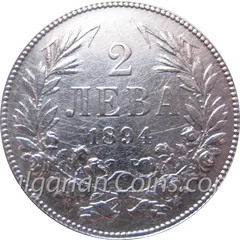
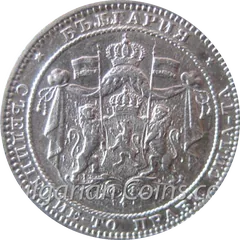
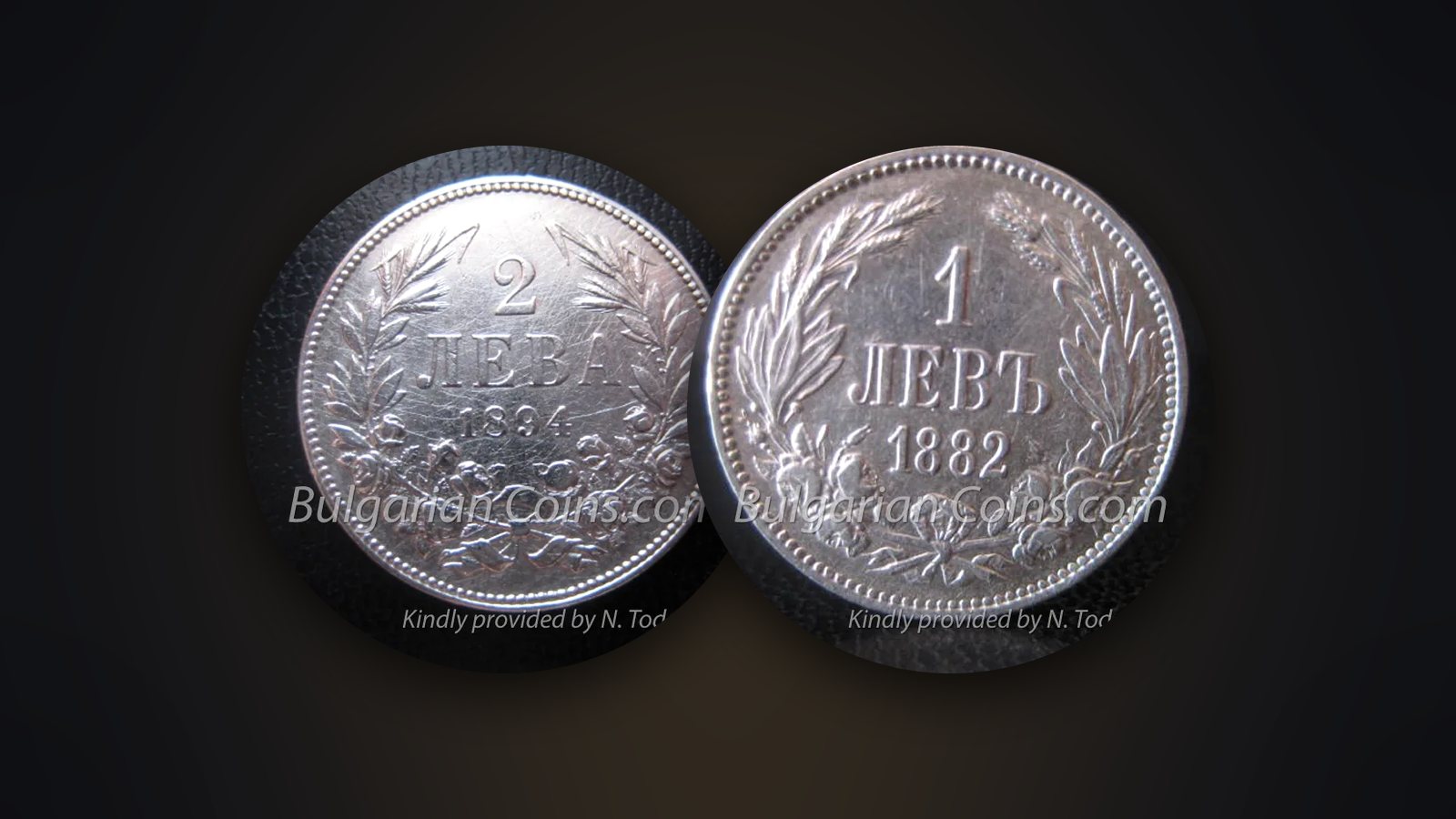
The coins most often offered cleaned are the silver 2 leva 1894, 1 lev 1882 and the 5-leva coins of the Principality. The reason is that demand for them is high, and with them a shiny look “sells” to inexperienced buyers. Compare the price with the range of market prices – if an “uncleaned” coin is suspiciously cheap, the reason is often precisely the cleaning.
If you are not sure
For an expensive coin, choose one graded by PCGS or NGC. With them, cleaning is noted on the label as “Cleaned” or “Details”. How to read the label is explained in Coin grades. If you are buying in person, ask for the right to return the coin and see our guide Simple tests for a genuine coin.