Simple tests at home: magnet, weight, diameter and sound
How to weed out most fake silver and gold coins with a jeweller’s scale, calipers and a magnet
BulgarianCoins editorial team 4 min read
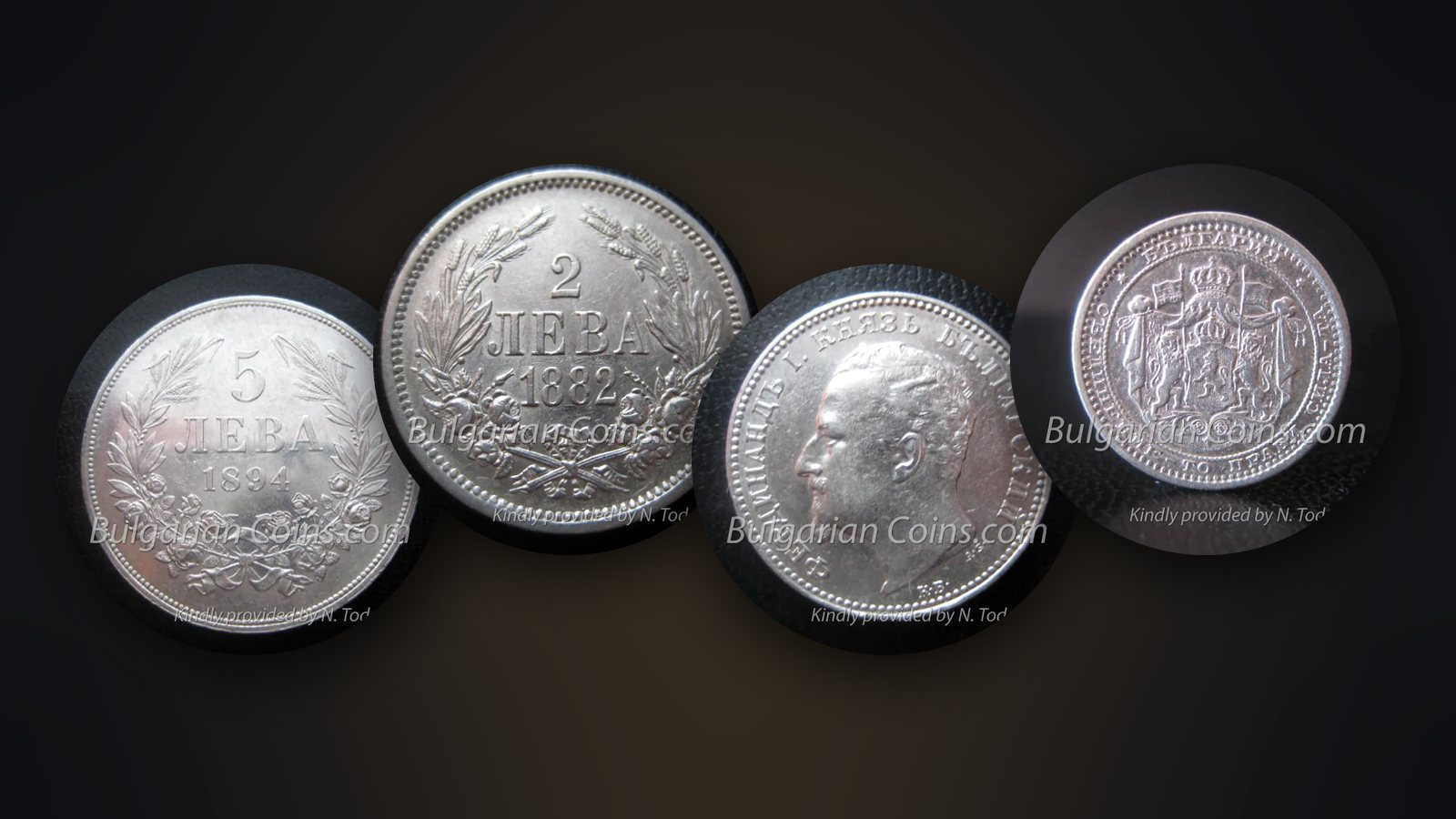
You do not need a laboratory to catch most fake coins. Three cheap tools – a scale, calipers and a magnet – and a few minutes of patience weed out a large share of the copies sold online and at markets. The tests do not prove authenticity, but they are very good at proving a counterfeit.
What you need
- A digital scale accurate to 0.01 g – a “jeweller’s” scale that costs about as much as an average coin.
- Calipers – preferably digital, accurate to 0.01 mm.
- A strong neodymium magnet – ordinary fridge magnets are too weak.
- A 10× loupe and good light.
Test 1: Magnet
Gold, silver and copper are not magnetic. If a silver or gold coin sticks to a neodymium magnet, it is made of steel or an alloy with iron and nickel – almost certainly a counterfeit.
There is also a subtler version: tilt the magnet and let the coin slide down it. Silver slides noticeably slowly, because eddy currents are induced in it. Base alloys slide quickly.
Caution: some genuine coins are magnetic. The Bulgarian coins of the war years are iron – the 1, 2, 5 and 10 leva of 1941 and the 2, 5, 10 and 50 leva of 1943 (1943, 50 leva). For these, the magnet is not a test for counterfeits.
Test 2: Weight
Weight is the most useful home test. A counterfeiter finds it hard to achieve the correct weight, size and appearance all at once with a cheaper metal.
| Coin | Metal | Weight | Diameter |
|---|---|---|---|
| 5 leva 1884, 1885, 1894 | Ag 900/1000 | 25 g | 37 mm |
| 5 leva 1892 | Ag 835/1000 | 25 g | 37 mm |
| 2 leva 1882, 1894 | Ag 835/1000 | 10 g | 27 mm |
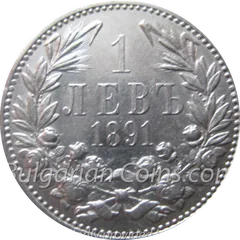
| 1 lev 1882, 1891, 1916 | Ag 835/1000 | 5 g | 23 mm |
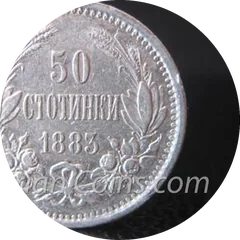
| 50 stotinki 1883 | Ag 835/1000 | 2.5 g | 18 mm |
| 100 leva 1930, 1934, 1937 | Ag 500/1000 | 20 g | 34 mm |
| 50 leva 1930, 1934 | Ag 500/1000 | 10 g | 27 mm |
| 20 leva 1930 | Ag 500/1000 | 4 g | 21 mm |
| 20 leva 1894, 1912 (gold) | Au 900/1000 | 6.45 g | 21 mm |
| 100 leva 1894, 1912 (gold) | Au 900/1000 | 32.26 g | 35 mm |
How to interpret the result:
- Worn silver coins lose metal. A 5 leva coin of 1885 in poor condition may weigh 24.5–24.8 g. That is normal. 23 g, however, is not.
- Gold wears much less. On a gold coin a deviation of more than 0.1–0.2 g is a serious signal.
- A coin heavier than the norm is also suspicious – plated lead or tungsten counterfeits are sometimes heavier.
Test 3: Diameter and thickness
If the counterfeit is made of a lighter metal but has the correct weight, it must be thicker or wider. Measure the diameter in two or three places and compare with the catalogue. Also compare the thickness with a verified original, if you have one. A difference of 0.3–0.5 mm in diameter on a coin that should be identical to others is grounds for suspicion.
Test 4: Sound
A silver coin balanced on a fingertip and tapped lightly with another coin gives a long, clear ring. Counterfeits of base alloys sound duller and shorter. The test is useful if you have something to compare with, but is not reliable on its own – a crack or wear can change the sound.
Test 5: Loupe
Under a loupe, look for:
- a porous surface or small bubbles – a sign of a cast coin;
- blurred letters and “soft” edges to the relief;
- a seam along the edge – a sign of casting in two halves;
- an edge that does not match the description in the catalogue (plain, reeded or inscribed).
When the tests are not enough
Good counterfeits in gold or silver of the correct fineness pass all four tests. With them the problem is a false year or rarity. So for expensive coins:
- buy coins graded by NGC or PCGS;
- use professional XRF metal analysis at a jeweller or dealer – it does not damage the coin;
- compare the details with verified photos from the catalogue.
You will find more about which coins are copied most often in the article The most counterfeited Bulgarian coins.