The gold coins of Ferdinand: 1894 and 1912
The five gold coins of the prince and tsar – mintages, differences, restrikes and prices
BulgarianCoins editorial team 3 min read
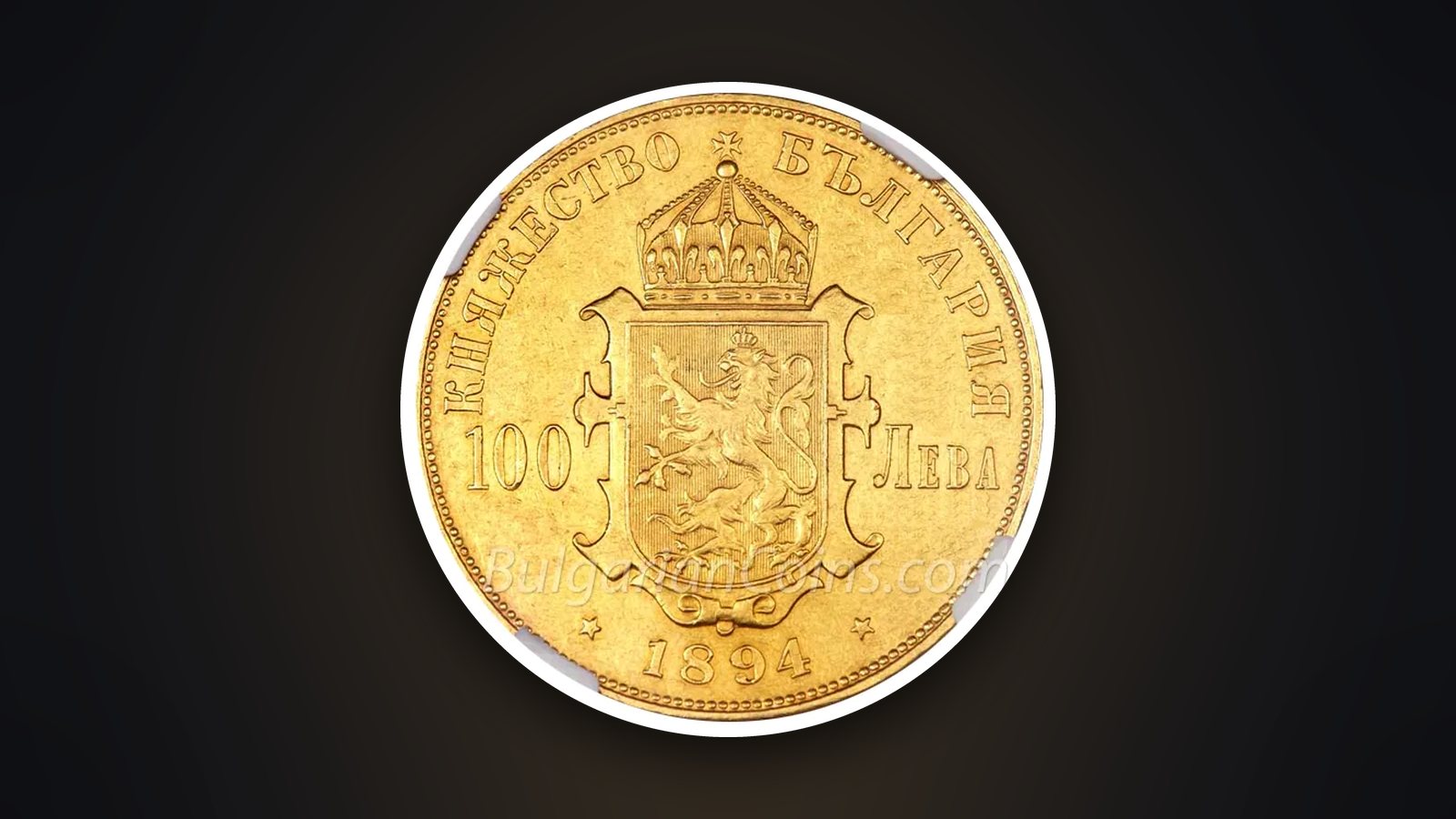
Ferdinand I ruled Bulgaria from 1887 to 1918 – first as prince, and from 1908 as tsar. Under him Bulgaria struck its first and last historical gold coins. There are five in all, and they are the pinnacle of any collection of the period.
1894: the first gold coins
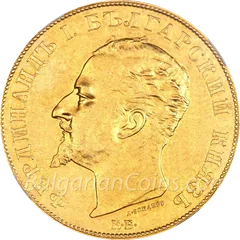
In 1894, seven years after Ferdinand’s accession, Bulgaria struck its first gold coins. They were struck in Kremnica and bear the prince’s portrait. The fineness is 900/1000, to the standard of the Latin Monetary Union.
| Coin | Weight | Pure gold | Mintage | Median listing |
|---|---|---|---|---|
| 10 leva 1894 | 3.23 g | 2.9 g | 75,000 | ≈ €1,470 |
| 20 leva 1894 | 6.45 g | 5.8 g | 100,000 | ≈ €2,500 |
| 100 leva 1894 | 32.26 g | 29 g | 2,500 | single listings, up to €68,000 |
The 100 leva 1894 is the rarest and most expensive historical Bulgarian coin. With a mintage of 2,500 pieces, it appears on the market very rarely. See The 10 most expensive Bulgarian coins.
1912: the jubilee coins
1912 marked 25 years since Ferdinand’s accession. To mark the occasion the 20 leva and 100 leva were struck. They carry the tsar’s portrait by Rudolf Marschall and the date of Independence – 22 September 1908.
| Coin | Weight | Pure gold | Mintage | Median listing |
|---|---|---|---|---|
| 20 leva 1912 | 6.45 g | 5.8 g | 75,000 | ≈ €4,200 |
| 100 leva 1912 | 32.26 g | 29 g | 5,000 | ≈ €9,000 |
In October of the same year the Balkan War broke out and the BNB stopped exchanging banknotes for gold. See The gold standard in Bulgaria.
The restrikes
In 1967–1968 the Sofia Mint restruck the 20 and 100 leva 1912 with the old dies. The restrikes are in proof quality and are worth considerably less than the originals. How to tell them apart – in Restrikes and originals.
The counterfeits
Ferdinand’s gold coins are among the most counterfeited Bulgarian coins. There are gilded base-metal counterfeits, and also ones in lower-fineness gold. The main checks:
- Weight – 6.45 g for the 20 leva, 32.26 g for the 100 leva. A deviation of more than 0.05 g is a sign of a problem.
- Diameter – 21 mm for the 20 leva, 35 mm for the 100 leva.
- The details of the portrait and the letters – compare with the photos in the catalogue.
- The sound – gold has a characteristic ring.
See also Simple tests for a genuine coin.
Metal value
Each of these coins has a price “floor” – the value of the gold in it. At a price of around €3,700 per troy ounce, the 20 leva contains about €690 of gold, and the 100 leva about €3,450. The market price is many times higher because of rarity. See Metal value versus collector value.
How to collect
The complete set of five coins is a dream for many collectors. Start with the 20 leva 1894 – it is the most affordable. For the 100 leva of 1894 and 1912, insist on a certificate from PCGS or NGC. See Should you send coins to NGC or PCGS.
Prices are medians of current listings on Balkan Auction as of 19.10.2026.